Advanced Spine Care


Innovative physical therapy techniques can relieve back pain noninvasively. In most cases, surgery is not necessary, and patients improve with physical therapy.
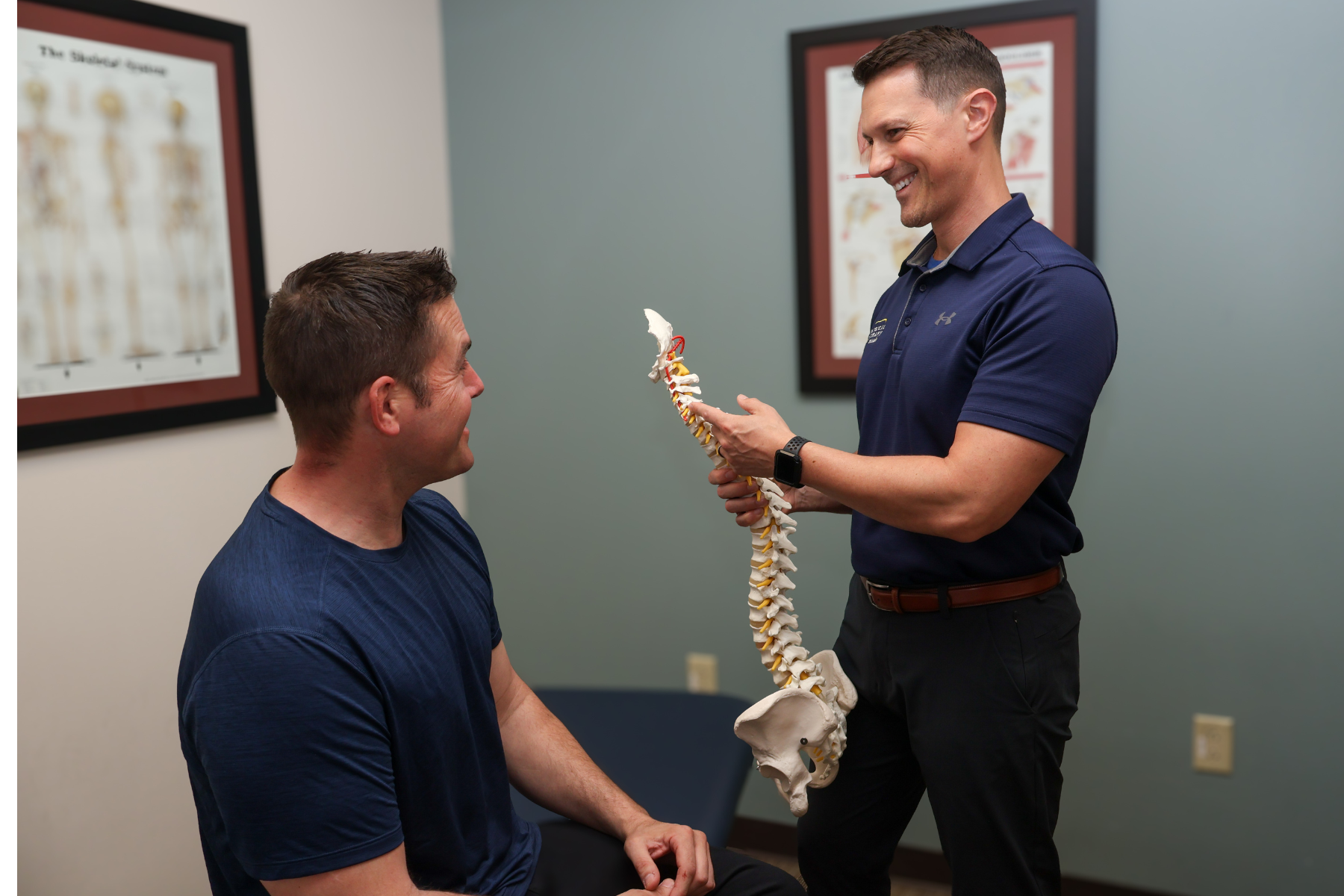
One of our expert physical therapists gestures to a model of the spine as he explains back and lumbar pain to a patient.

Don’t live with pain, treat it.

Whether your pain is acute or chronic, you can trust our advanced spine care practitioners to reduce your symptoms and return to a more active lifestyle.

  • Our therapists specialize in the early evaluation and treatment of back and neck pain.
  • We can help you avoid unnecessary surgery, imaging, and medication.
  • Many patients experience an improved condition within one visit.

Advanced Spine Care Programs


Manual Therapy

Manual therapy is defined as the skilled, specific passive movement of joints and soft tissues applied at varying speeds and amplitudes in order to:

  • Reduce pain
  • Increase range of motion
  • Reduce or eliminate soft tissue inflammation
  • Induce relaxation
  • Improve tissue repair, extensibility and/or stability
  • Facilitate movement
  • Improve function
  • Provide long lasting relief

Some common procedures include:

  • Spinal and peripheral joint mobilization
  • Manual soft tissue mobilization
  • Instrument assisted soft tissue mobilization
  • Trigger point therapy
  • Myofascial release
  • Counterstain

Our expert physical therapists can determine if manual therapy is the right fit for your individual needs and goals by performing a thorough evaluation.
An expert physical therapist performs manual therapy on a patient, positioned on an exam table, to alleviate back and lumbar pain.

Scoliosis

Adolescent Idiopathic Scoliosis (AIS) is the most common type of Scoliosis and is a condition that impacts the development of the spine in adolescents. It is both a structural and functional change, and physical therapists play an important role in managing it effectively!

Modern Physical Therapy Scoliosis treatment is built on practices that have been working for over 100 years, such as those introduced by Schroth, Rigo, and other methods.
One of our expert physical therapists guides a patient through movement with an exercise ball to build strength and alleviate back and lumbar pain.

Physical Therapy for Scoliosis is…

  • Individualized – We examine many elements of the patient such as their curve, posture, diagnostic imaging, strength and mobility to make treatment plans that are specific to each patient’s needs and presentation.
  • Focused – Each patient is unique with different limitations and varied goals and priorities. Our therapists will promote a plan of care that works towards these goals making them the emphasis of our outcomes.
  • Empowering – Scoliosis is a condition that can seem alarming and overwhelming. Our therapy approach helps to empower patients and families with the knowledge and the confidence needed to achieve success and the tools to self-manage this condition.
  • Collaborative – Our therapists work side-by-side with other specialists including orthopedic surgeons and orthotists to ensure that each patient case and concerns are being addressed thoroughly and effectively.

Benefits of Physical Therapy for Scoliosis:

  • Improved postural control
  • Reduce pain and discomfort
  • Better strength and endurance
  • Reduce curve progression

While Scoliosis can be identified in children at a much earlier age, the best time to pursue physical therapy treatment is during adolescence when bone growth and maturity is happening most rapid. Changes made at this time have the best chance of being effective over the long-term.

Schedule an Appointment

Our experienced team at Physical Therapy at St. Luke's is here to help you on your journey to recovery and improved mobility.

Schedule

Frequently Asked Questions

1. Will physical therapy help with my lower back pain?

Yes, physical therapy is a great first step to assess and manage acute and/or chronic back pain. After an assessment, a physical therapist can formulate an individualized plan to address inflammation, weakness, and loss of mobility. They’ll provide exercises to increase range of motion, stabilize your core, and enhance your flexibility. Physical therapy is intended to address the root cause of the pain, not just the symptoms, and to prevent symptom recurrence. The goal of physical therapy is to help you gain back your function and improve your overall lifestyle.

2. Can physical therapy help with neck pain and stiffness?

Yes, physical therapy should be considered one of the first lines of defense for neck pain and stiffness. A physical therapist can determine the root cause of your problem, including posture, mobility, and muscle imbalances that may be contributing to your pain. Physical therapists can suggest exercises that help reduce pain and stiffness and work to prevent future issues. Treatment may involve stretching, mobilization techniques, postural and ergonomic correction, strengthening of specific muscles, and modalities to reduce pain and inflammation. If necessary, physical therapists can also make appropriate referrals to other health care providers.

3. Is physical therapy effective for herniated or bulging discs?

Yes, physical therapy is an effective treatment for herniated or bulging discs. Herniated or bulging discs are surprisingly common, even in people without any back pain! A physical therapy evaluation and customized treatment plan are often the best and quickest way to address disc issues. Physical therapists can determine the cause of the herniation and devise treatment to relieve symptoms and prevent the issue from returning. They will identify and assess joints, nerves, and muscles that might not be moving correctly or might be irritated from the herniation. Most often, herniated or bulging discs are able to heal with the right physical testing and healing plan. Physical therapy can help you decrease pain, restore function, and get back to your life as soon as possible.

4. Is rehab helpful for pinched nerves in the neck or back?

Yes, physical therapy can help with pinched nerves. Nerve pain arises from different sources, so a physical therapist will work to uncover the primary reason for your symptoms, then tailor treatments to your specific situation. These treatments might be focused on increasing the room around the affected nerve or calming an irritated nerve. Expert treatment always begins with a skilled evaluation, and our physical therapists have advanced training related to the spine. Physical therapy will help you get back to your prior level of function as quickly as possible.

5. Does physical therapy work for spinal stenosis?

Yes, physical therapy can help with spinal stenosis. If you have spinal stenosis, physical therapists can design an individualized exercise program to improve your muscular strength, increase endurance, and reduce pain. Physical therapists are equipped with tools to improve your quality of life. They can use gait training to increase your ability to walk longer distances, functional training to improve tasks such as stairs and rising from sitting, and balance training to bolster your confidence and safety inside your home and in the community.

6. Can physical therapy help with poor posture–related pain?

Yes, physical therapy can help with posture-related pain, including strains from work and home environments. Physical therapists can provide an individualized treatment plan designed to restore mobility and promote stability, which will help relieve posture-related symptoms. A physical therapist will focus first on addressing and improving the contributing factors of poor posture, then on providing you with the tools to correct it and maintain your health.

7. Can physical therapy relieve chronic back pain?

Yes, physical therapy can help relieve chronic low back pain. Chronic low back pain can occur for many different reasons. A physical therapist can evaluate your specific situation and tailor a treatment plan specific to their findings, giving you the best chance of finding relief. If further interventions beyond a physical therapist’s scope of practice are necessary, they can work with other specialists to find the ideal treatment approach for you.

8. Will therapy help after back surgery?

Yes, physical therapy will help after back surgery. Your timeline for recovery and movement after surgery depends on the type of surgery you had and your surgeon’s instructions. Your physical therapist will help you understand your surgery, identify your movement goals, and build your strength and mobility back up. They’ll perform an evaluation to determine what impairments are present, such as limited range of motion and limited strength, so that they can develop a targeted treatment plan to support your recovery. Physical therapists will also discuss your functional difficulties, like standing or walking, self-care, or climbing stairs, and how you can modify your home or obtain an assistive device to make your recovery easier and safer.


Our specialized physical therapists include Board Certified Clinical Specialists, Advanced Certified Clinical Specialists, and Fellowship-trained physical therapists.

If you have back pain, schedule an evaluation with us now! Patients have the right to be evaluated and treated by a Direct Access Physical Therapist for 30 days without a prescription from a doctor, so you can get the relief you need right away.