What Causes Elbow Pain?
The most common causes of elbow pain we see among patients are tennis elbow (outside elbow) and golfer’s elbow (inside elbow). Both involve tendinopathy in the muscles surrounding the elbow joint. Repetitive movements that stress the tendons, such as lifting, twisting, gripping, throwing, or repetitive work activities, can lead to overuse injuries. In these cases, the tissues break down and are unable to be repaired due to repeated stress. Other causes of elbow pain may include arthritis, nerve irritation, or trauma, such as a fall.
How Can Physical/Occupational Therapy Help Tennis Elbow?
Physical and occupational therapy can reduce pain and promote healing, improve strength and flexibility, address contributing movement patterns, provide education on proper ergonomics, and help prevent recurrence. A physical therapist or occupational therapist can help identify what may be contributing to your pain and develop a personalized plan to restore movement, strength, and function.
How Long Does It Take to Recover from Elbow Tendonitis?
Recovery can take a few weeks to several months, depending on the severity and duration of symptoms. Earlier treatment often results in quicker symptom relief and improved outcomes. Physical and occupational therapy can help support recovery by reducing pain, improving strength and flexibility, and addressing the underlying factors that may be contributing to symptoms.
Should I Stop Exercising if My Elbow Hurts?
Not necessarily. A physical or occupational therapist can recommend modifications that allow you to remain active while healing. By seeking treatment before symptoms significantly limit daily activity, a therapist can recommend specific exercises and activity modifications. Goals of therapy are steady progress, not an overnight fix.
When Should I Seek Physical/Occupational Therapy for Elbow Pain?
You do not have to wait until the pain becomes severe to seek help. If pain persists for more than a few days, limits daily activities, or continues to worsen, a physical or occupational therapy evaluation may be appropriate.
Wrist & Hand FAQs
Why Do I Have Wrist Pain When Typing or Using a Computer?
Repetitive movements, poor ergonomics, tendon irritation, or conditions such as carpal tunnel syndrome can contribute to wrist pain.
Can Physical Therapy Help with Carpal Tunnel Syndrome?
Yes. Physical therapy can help manage symptoms through techniques to reduce inflammation within the carpal tunnel, teach patients nerve gliding, stretching, and strengthening exercises, and provide neuromuscular re-education and ergonomic education.
What Should I Do If I Have Numbness or Tingling in My Hand?
Numbness or tingling may indicate nerve involvement and should be evaluated by a healthcare professional. A physical or occupational therapist can assess your symptoms, identify contributing factors, and help determine the most appropriate treatment approach.
How Can Physical/Occupational Therapy Help After a Hand or Wrist Injury?
Therapy can reduce pain and swelling, improve mobility, restore strength, and help you safely return to daily activities. Depending on your condition, you may work with a physical therapist or occupational therapist specializing in hand and upper extremity rehabilitation. Both providers develop individualized treatment plans to support recovery and help patients safely return to work, sports, and the activities that matter most.
Can Arthritis in the Hand Be Treated with Physical/Occupational Therapy?
Physical and occupational therapy can help manage pain, improve joint mobility and mechanics, provide or recommend appropriate orthoses, and teach joint protection strategies to lessen further stress on the joints.
What is Hand Therapy?
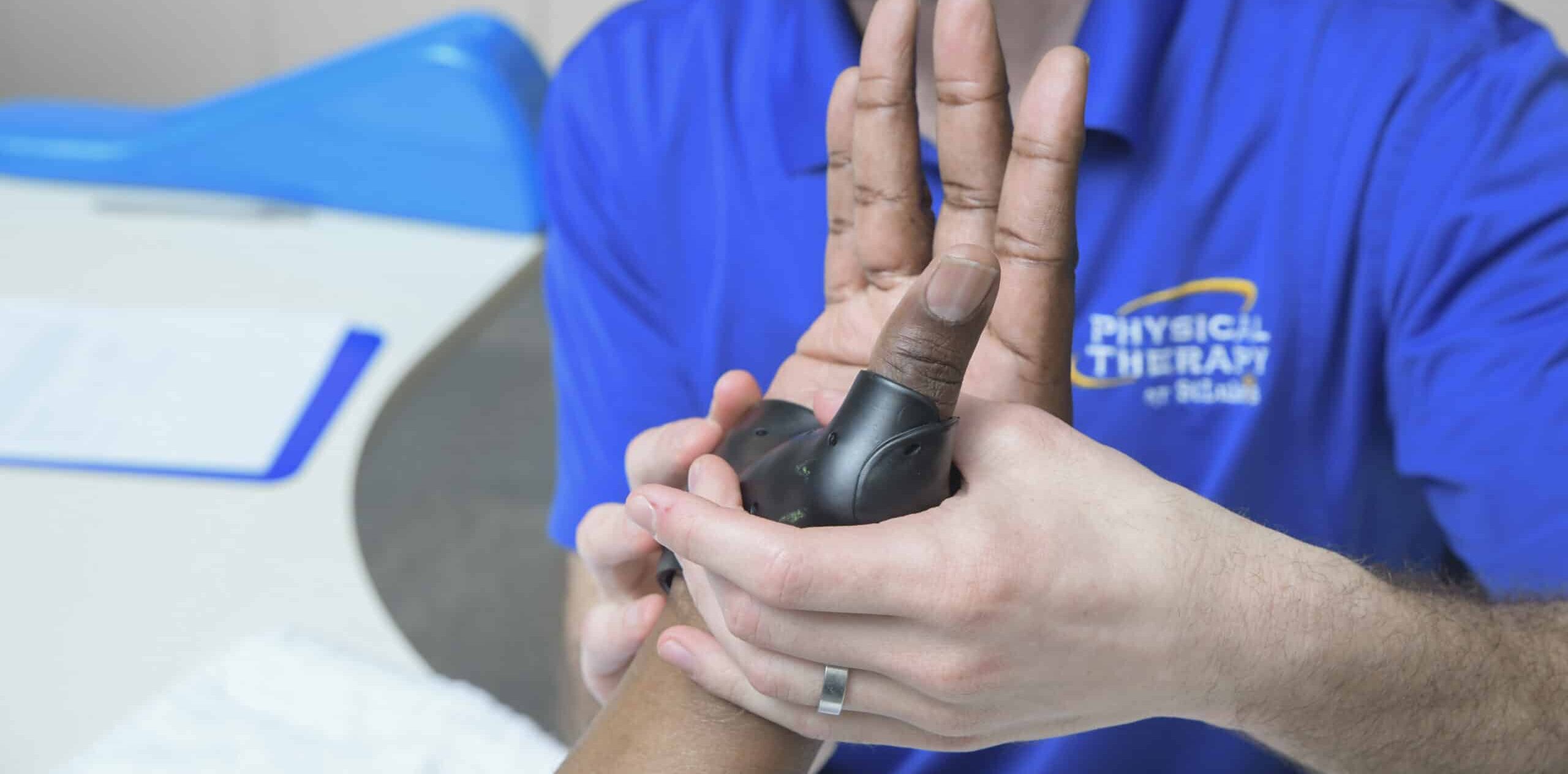
Hand therapy is a specialized area of rehabilitation focused on conditions affecting the hand, wrist, elbow, and shoulder. At Physical Therapy at St. Luke’s, our occupational and physical therapists who specialize in hand therapy provide individualized treatment plans designed to restore motion, strength, and function. In addition, Certified Hand Therapists (CHTs) have advanced clinical experience and specialized certification in upper extremity rehabilitation. Hand therapists can also fabricate custom protective and dynamic orthoses (splints) to support healing and help patients safely return to the activities that matter most.
What Is the Difference Between Occupational and Physical Therapy Treatment for Hand and Wrist Injuries?
Both occupational therapists and physical therapists who work in the hand specialty provide the same types of treatments, including pain and edema management, improving range of motion and flexibility, restoring proper mechanics of the hand and wrist, using modalities to help accelerate healing, fabricating custom orthoses depending on the patient’s needs, and improving strength and function to aid in recovery.
A Certified Hand Therapist (CHT) is a physical or occupational therapist who has advanced clinical experience and achieved specialized certification in rehabilitation of the hand, wrist, elbow, and upper extremity.
Direct Access – Get the Relief and Recovery You Need Now, Without a Physician’s Prescription!
To go to physical therapy, most states, including Pennsylvania and New Jersey, no longer require a prescription from your physician. This law, known as Direct Access (DA) allows you to see a DA-certified physical therapist immediately, so that you can get the outpatient physical therapy care you need right away. Most health insurance covers physical therapy obtained by using Direct Access, but if they do not, our staff will help you get what you need from your doctor to be covered under your insurance.