What is BPPV?
Benign Paroxysmal Positional Vertigo (BPPV) is one of the most common causes of vertigo, a sensation that you or your surroundings are spinning. The condition occurs when tiny calcium carbonate crystals in the inner ear become dislodged from their normal location and move into areas where they do not belong. Because these crystals help your brain detect head movement and maintain balance, their displacement can send incorrect signals to the brain and trigger episodes of vertigo.
The term “benign” means the condition is not life-threatening; “paroxysmal” refers to its sudden onset, “positional” indicates that symptoms are triggered by certain head movements or positions, and “vertigo” describes the spinning sensation.
What are common symptoms of BPPV?
The most common symptom of Benign Paroxysmal Positional Vertigo (BPPV) is a brief spinning sensation, known as vertigo, that is triggered by certain head movements or changes in position. People often notice symptoms when rolling over in bed, lying down, getting out of bed, looking up, bending down, or turning their head quickly.
Symptoms typically occur in short episodes rather than being constant throughout the day. In addition to vertigo, individuals with BPPV may experience dizziness lasting seconds to minutes, feelings of imbalance or unsteadiness, nausea, and difficulty focusing their eyes during an episode. Symptoms are commonly triggered by movements such as rolling in bed, sitting up, lying down, looking upward, or bending over.
How can PT help?
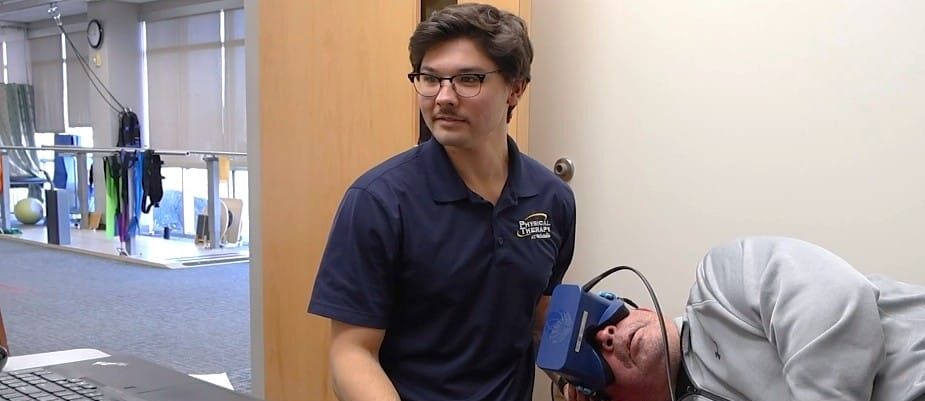
A physical therapist trained in vestibular rehabilitation can evaluate and treat BPPV by identifying whether displaced inner ear crystals are causing your symptoms. Through a series of specialized assessments, the therapist can determine which part of the inner ear is affected and develop the most appropriate treatment plan.
Treatment typically involves repositioning maneuvers, which are specific head and body movements designed to guide the displaced crystals back to their proper location within the inner ear. These maneuvers are safe, effective, and often provide significant relief from symptoms.
Many people experience improvement after one visit with resolution of symptoms after a few sessions. If dizziness, imbalance, or motion sensitivity persists, a vestibular physical therapist may also prescribe individualized exercises to improve balance, reduce dizziness, and help you return to your normal daily activities.
By addressing the underlying cause of BPPV, physical therapy can help reduce vertigo, improve stability, decrease fall risk, and restore confidence with movement.
When should I seek treatment for BPPV?
If you are experiencing recurring episodes of vertigo, dizziness with position changes, balance difficulties, or symptoms that are interfering with your daily activities, it may be time to seek an evaluation. A vestibular physical therapist can determine whether BPPV is the cause of your symptoms and provide treatment to help resolve them.
Get the Relief and Recovery You Need Now, Without a Physician’s Prescription! To go to physical therapy, most states, including Pennsylvania and New Jersey, no longer require a prescription from your physician. This law, known as DIRECT ACCESS (DA) allows you to see a DA certified physical therapist immediately, so that you can get the outpatient physical therapy care you need right away. Most health insurance covers physical therapy obtained by using Direct Access, but if they do not, our staff will help you get what you need from your doctor to be covered under your insurance.
Schedule an evaluation with us now!
Physical Therapy at St. Luke’s Cutting-Edge Neurotechnology – Click to learn more about how vestibular goggles, blaze pods and the solo-step harness system can be used during your neuro-rehabilitation needs.